
 EN
EN
 es
es ru
ru ar
arUsed Construction Machinery Buying Guide: How to Choose a Reliable Machine?
Preface: As more engineering firms refine their procurement strategies for construction equipment, an increasing number are turning to used machinery buying guides. To achieve best practices in second-hand equipment procurement, it is essential to adopt a scientific approach, avoid common pitfalls, and select a machine that truly delivers dependable performance.
As the construction machinery market becomes more rational, more equipment owners are turning their attention to used excavators for their superior cost-performance ratio. However, the second-hand market can be treacherous. The line between a superficially shiny "cosmetically refurbished" machine and a solid, durable "workhorse" is often razor-thin. As a maintenance technician with years of hands-on experience in the industry, I have distilled a practical, three-step inspection protocol—"Look, Test, and Measure" —to help you develop a discerning eye and make a sound investment.
Step 1: Visual Inspection – Reading the Clues from the Outside In
A meticulous static inspection before start-up can eliminate a significant number of problematic machines right from the start.
1. Verify Identity and Watch Out for "Odometer Tampering"
Start by checking the machine's nameplate to confirm the date of manufacture, model, and other specifications. Pay close attention to whether the hours displayed on the meter align reasonably with the machine's age and the information on the nameplate. A five-year-old machine showing only 2,000 hours is a strong indicator of meter tampering. More egregious cases involve forged or replaced nameplates. Such machines warrant extreme caution, and their assessed value should be significantly discounted.
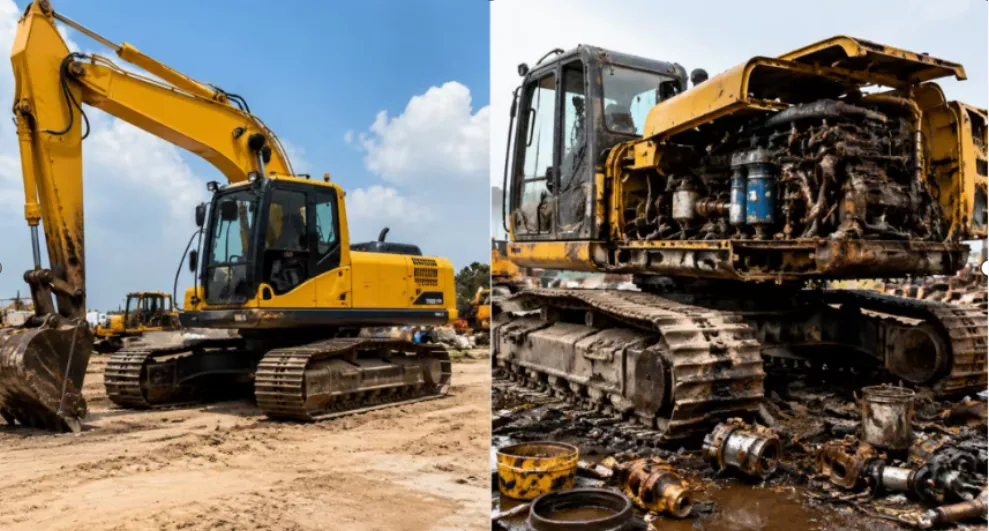
2. Scrutinize the Exterior to Infer a "Troubled Past"
Structural Components: Carefully inspect the boom, arm, platform, and frame for cracks, weld repairs, or the presence of added reinforcement plates. Check if the cab glass is original and if the engine hood shows signs of severe deformation. These signs can hint at previous major accidents or chronic overloading.
Attachment Traces: Pay special attention to whether the machine has been equipped with a hydraulic breaker (hammer) . The presence of pre-installed or modified attachment piping suggests the machine has been used for high-impact work. Such operations impose tremendous stress on the hydraulic system, significantly shortening the life of valve spools, hoses, and the main pump. The machine's value should be substantially reduced—it is simply not comparable to a machine used primarily for earthmoving.
3. Inspect the Engine to Uncover "Hidden Ailments"
Examine the engine for oil stains in various areas. Oil leaks from the cylinder head or oil pan are relatively manageable to fix. However, leaks around the fuel injection pump or injector nozzles are complex and expensive to repair. Also, check the radiator: excessive dust buildup or dried coolant stains could indicate a history of overheating, which warrants further investigation.
4. Probe the Hydraulic System for "Leak Points"
Inspect the main pump, main control valve, swing motor, travel motors, and all hydraulic hose connections. If you find oil-soaked dust forming a "wet mud" consistency, it indicates a chronic seepage. While replacing worn O-rings is straightforward, internal leakage within the pump, valve, or motor housing necessitates major repairs and serves as a strong bargaining point for price negotiation.
Step 2: Dynamic Testing – Assessing Engine and Control Performance
Start the machine and evaluate its core functions through hands-on operation.
1. Start-Up Performance Test
Normal: The starter motor sounds crisp, and the engine fires up within 3 seconds.
Abnormal: A sluggish, straining starter motor could point to issues with the starter or battery. If the motor spins freely and sharply but requires multiple attempts to start, it may suggest inadequate fuel supply from the injection pump.
Caution: If you see a battery that has just been disconnected from a charger, it might be a "fully charged performance" designed to mask a weakened battery. Be wary.
2. Engine Load Test
Idle Test: Set the throttle to idle (typically 850–1000 RPM) and perform combined operations (e.g., moving multiple actuators simultaneously). A healthy machine should move slowly but not stall. If it stalls, there is likely an issue with engine calibration or pump-valve matching.
Full-Load Test: Set the throttle to maximum and perform both single and combined operations under heavy load (e.g., digging into hard soil, lifting the machine by pressing the boom against the ground). Observe the following:
Speed Drop: A drop in engine RPM exceeding 10% is considered abnormal.
Exhaust Smoke: Thick black smoke under heavy load indicates insufficient engine power to meet the hydraulic pump's demand. This is a serious problem with potentially high repair costs.
Step 3: Precision Assessment – In-Depth Hydraulic System Verification
This step is key to determining if the machine has the "power and precision" required for real work.
1. Operational Testing & Benchmarking
Travel: Drive in a straight line for about 10 meters to check for significant deviation. Also, test single-side travel to ensure both tracks are functioning properly.
Swing: Test both slow and fast swing speeds. The joystick response should be smooth and linear. After releasing the joystick, the swing coasting angle should ideally be less than 45 degrees. If the upper structure continues turning for a large arc after braking, the swing motor or brake pads likely need servicing.
Work Attachments: Test the speed and smoothness of the bucket, arm, and boom movements. It is helpful to compare their speed against a new machine of the same model for reference—significantly faster or slower speeds are both abnormal.
2. Seal Integrity Test (Internal Leakage Check)
Cylinder Hold Test: Use the bucket or blade to lift one side of the machine off the ground, putting the hydraulic cylinders under load. Maintain this position for half an hour and measure the cylinder piston rod retraction. A few centimeters of retraction is normal for an older machine, but if the rod drops significantly (e.g., more than 10 cm), it indicates severe internal leakage in the cylinders or control valves.
Hill Hold Test: Park the machine on a 20–30 degree slope, shut it off, and let it sit for half an hour. Check for any movement, which would indicate poor sealing in the travel motor brakes.
3. Pressure Testing (Professional Final Check)
For the most reliable diagnosis, performing key pressure tests is the gold standard:
Main Pump Pressure: Typically around 31.5 MPa for machines over 13 tons, and ranging from 16–27 MPa for smaller models. Insufficient pressure means the machine will lack power.
Pilot Pressure: Standard range is generally 2.5–4 MPa. Low pilot pressure results in sluggish, unresponsive operation.
Return Backpressure: Normally around 0.1–0.5 MPa. Excessive backpressure will cause oil temperatures to spike, while insufficient pressure may lead to inadequate oil replenishment.
"Buying used construction machinery is about more than just price; it's about your ability to accurately assess the machine's true condition. As an independent procurement agent, we are here to help you make the right purchasing decisions in China's used construction machinery market, every single time."